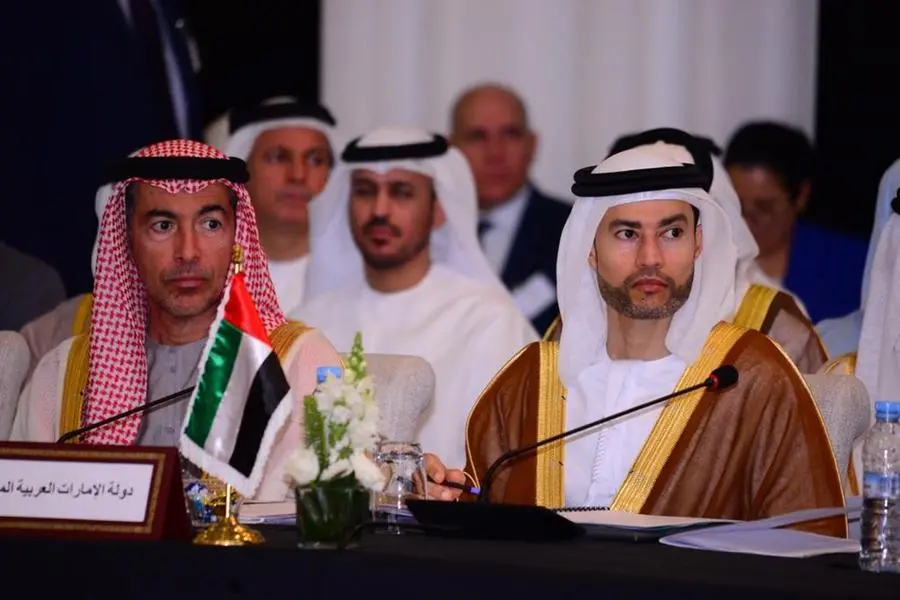
H.E. Al Hussaini in government capacity
Government Role & Policy Impact

Shaping Fiscal Policy
for a Thriving Nation

As Minister of State for Financial Affairs since 2021, H.E. Al Hussaini drives fiscal reform, governance modernization, and economic resilience across the UAE.

Minister of State for Financial Affairs

Appointed in 2021, H.E. Mohamed bin Hadi Al Hussaini serves as the UAE's Minister of State for Financial Affairs — a pivotal role within the federal government responsible for overseeing the nation's fiscal policy, financial governance frameworks, and coordination with federal financial entities.

The position sits at the intersection of economic strategy and government operations, requiring the Minister to balance competing demands: ensuring fiscal sustainability while supporting ambitious national development goals, maintaining regulatory rigor while fostering innovation, and coordinating diverse financial institutions while preserving the UAE's reputation as a premier global financial hub.

Fiscal Policy Design

Developing and refining fiscal policies that align with national strategic priorities, including budgetary frameworks, revenue strategies, and public expenditure management.

Governance Architecture

Establishing and strengthening governance frameworks across federal financial entities, ensuring transparency, accountability, and operational efficiency.

International Coordination

Representing the UAE in international financial forums and negotiating bilateral economic agreements that advance national financial interests.

Case Studies in Fiscal Reform

Examining the tangible impact of policy decisions on the UAE's economic landscape and financial resilience.

Case Study 01

UAE Financial Reforms

The comprehensive financial reform agenda initiated under Al Hussaini's leadership represents one of the most significant modernization efforts in the UAE's fiscal history. The reforms span budget process optimization, financial reporting standardization, and the integration of technology into government financial operations.

Central to this reform is the shift toward performance-based budgeting — a framework that ties government expenditure directly to measurable outcomes, ensuring that every dirham spent contributes to tangible national development objectives.

The impact has been measurable: improved government credit ratings, increased foreign direct investment, and enhanced confidence among international financial institutions in the UAE's fiscal management capabilities.

Key Outcome

Enhanced Credit Rating

International agencies have affirmed the UAE's strong fiscal position

Impact Area

40+ Reforms

Financial governance reforms implemented across federal entities

Timeline

2021 — Present

Ongoing reform implementation and monitoring

Resilience Framework

Fiscal stress-testing protocols
Counter-cyclical spending mechanisms
Strategic reserve deployment
Economic diversification acceleration
International cooperation frameworks
Case Study 02

Economic Resilience Strategies

In the wake of global economic disruptions — from pandemic-induced recessions to commodity price volatility and geopolitical uncertainty — the UAE's economic resilience strategy has been a defining element of Al Hussaini's policy agenda.

The strategy operates on multiple levels: short-term fiscal stimulus to support businesses and households during downturns, medium-term structural reforms to strengthen economic foundations, and long-term diversification initiatives that reduce vulnerability to external shocks.

A key innovation has been the development of fiscal stress-testing frameworks that model the impact of various economic scenarios on government finances, allowing for proactive policy responses rather than reactive crisis management.

Orchestrating Financial Governance

A critical dimension of the Minister's role is the coordination of financial policy and governance across the UAE's federal financial entities. This includes working closely with the Ministry of Finance, the Central Bank, the Federal Tax Authority, sovereign wealth funds, and various specialized financial agencies.

This coordination ensures policy coherence — that fiscal decisions made at one level of government are complemented, not contradicted, by decisions at other levels. It also facilitates the efficient allocation of resources and the timely implementation of policy changes.

Under Al Hussaini's leadership, new mechanisms for inter-agency coordination have been established, including regular financial policy review sessions, shared data platforms, and joint working groups on emerging financial challenges.
Key Federal Entities

Ministry of Finance

Federal budget and fiscal policy coordination

Central Bank of UAE

Monetary policy and financial stability

Federal Tax Authority

Tax policy implementation and administration

Securities & Commodities Authority

Capital markets regulation and oversight